
According to Sexual Health Barometer survey, 34% of men between 18 and 69 years old reported experiencing a drop in libido over the previous 12 months. Behind this figure lies a wide spectrum of causes — chronic stress, hormonal fluctuations, nutritional gaps — many of which are directly influenced by what you eat and the supplements you choose. This guide identifies the seven most evidence-supported options, explains their mechanisms, and sets realistic expectations.
Your 3 priorities at a glance:
- Zinc and vitamin D deficiencies are among the most documented nutritional drivers of low libido in men — fix these first.
- Adaptogenic plants (ashwagandha, maca, ginseng) show consistent results in clinical settings but require regular intake over several weeks.
- Supplements combining multiple active compounds can accelerate results — but always cross-check ingredients against potential drug interactions.
The distinction between « scientifically supported » and « heavily marketed » is especially sharp in the sexual health space. Many products promise fast results with little evidence behind them. The seven options below are selected on the basis of clinical data, not advertising budgets.
Two categories are worth separating from the outset: whole foods that contribute micronutrients over time, and concentrated supplements that target specific physiological pathways. Both have a role — and both have limits.
Foods that lay the nutritional groundwork
Sexual desire is not triggered by a single nutrient — it is the downstream result of adequate hormone synthesis, healthy blood circulation, and stable nervous system function. Three foods stand out for their direct contribution to these mechanisms.
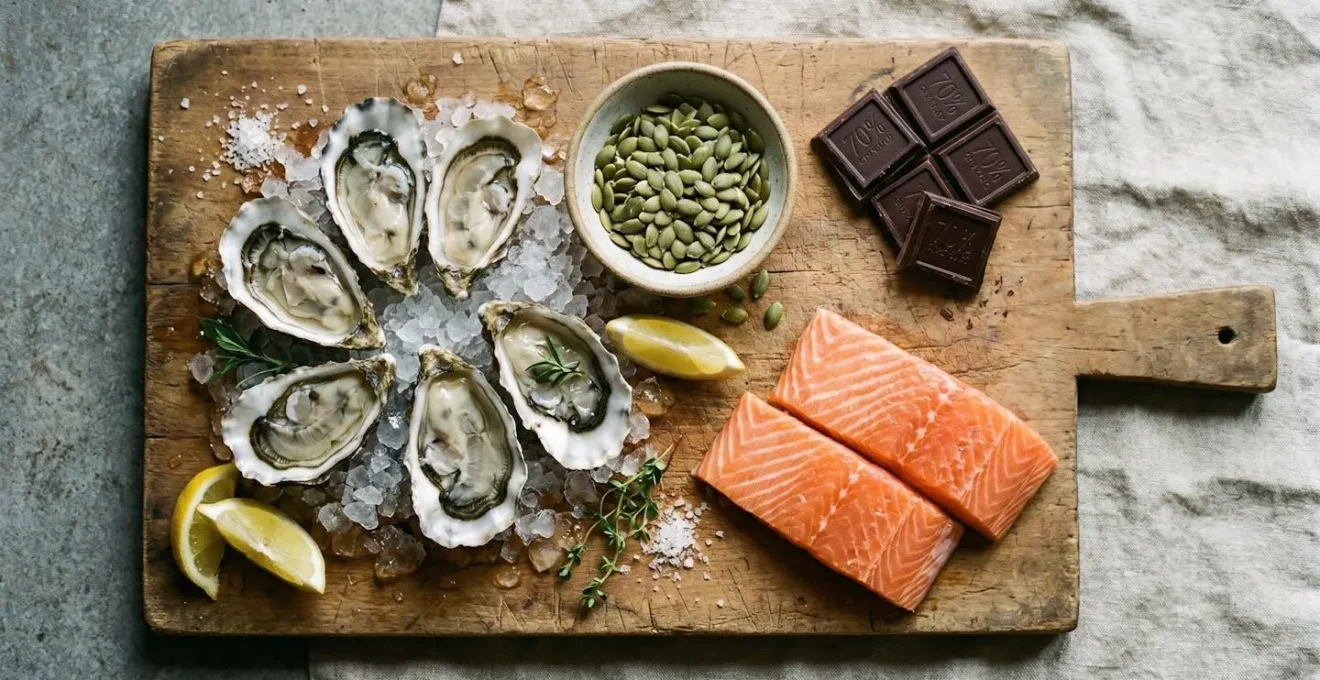
Oysters and zinc-rich foods are the most cited in the clinical literature on male sexual health. Zinc is a cofactor in testosterone synthesis; when intake is insufficient, testosterone levels measurably decline. Oysters contain the highest dietary concentration of zinc per serving — roughly 74 mg per 100 g — but pumpkin seeds, beef, and legumes also contribute meaningfully. The key is consistency: a single serving has no acute effect, but correcting a deficiency over four to eight weeks produces documented hormonal shifts.
Dark chocolate (70% cocoa or above) is another option with physiological plausibility. Its flavonoids support nitric oxide production, which in turn facilitates vasodilation — a mechanism directly relevant to erectile function. The effect is modest and dose-dependent, but it makes dark chocolate one of the few genuinely functional foods in this category, not merely a folk remedy.
Fatty fish — salmon, mackerel, sardines — deliver omega-3 fatty acids that support cardiovascular health and reduce systemic inflammation. Given that erectile dysfunction shares many of its risk factors with cardiovascular disease (as confirmed by a 2023 meta-analysis in The Journal of Sexual Medicine, which found erectile dysfunction prevalence at 52% in men over 40), maintaining circulatory health through diet is not a peripheral concern — it is central.
52%
Prevalence of erectile dysfunction in men aged 40 and over, based on a pooled analysis of 50 international studies
A practical way to approach dietary changes is to think in terms of substitution rather than addition. Replacing refined carbohydrates with zinc-rich proteins and omega-3 sources addresses multiple nutritional gaps simultaneously — without requiring a complete dietary overhaul.
Herbal and compound supplements with clinical backing
Where dietary changes build a nutritional foundation, targeted supplements can address specific physiological pathways more directly. Four ingredients consistently appear in peer-reviewed research on male libido and sexual performance.
Ashwagandha (Withania somnifera) is an adaptogenic plant with a well-documented impact on cortisol regulation. Since cortisol and testosterone operate in a roughly inverse relationship — high chronic stress suppresses gonadotropin release — reducing cortisol load through ashwagandha supplementation has been shown to produce modest but measurable testosterone increases in stressed, reproductively active men. The typical research dosage is 300–600 mg of root extract daily, with effects observable after six to eight weeks of consistent use.
Maca root (Lepidium meyenii) operates through a different mechanism: it does not appear to alter hormonal levels directly but consistently improves self-reported sexual desire in clinical trials. A Peruvian root traditionally consumed at altitude, maca’s active compounds (glucosinolates, macamides) seem to act on the central nervous system rather than the endocrine system. This makes it particularly relevant for men whose libido decline is linked to psychological factors or fatigue rather than hormonal deficiency.
While single-ingredient supplements are effective, many men prefer a synergistic approach that targets multiple pathways simultaneously. A professional formulation like Performerect libido LES 3 CHENES combines saffron, tribulus, ginseng, and zinc into one protocol. This combination is specifically engineered to stimulate desire while supporting vascular performance, offering a practical response for those seeking results within a 30 to 45-minute window following intake.
Panax ginseng has one of the longest research records of any adaptogenic plant in this category. Its ginsenosides support nitric oxide synthesis (like dark chocolate, but through a different pathway), and several randomized controlled trials have reported improvements in erectile function scores after 8–12 weeks of supplementation. It is worth noting that ginseng’s effects on libido and on erectile function, while related, are not identical — the former involves desire, the latter involves vascular mechanics.
Tribulus terrestris is frequently included in libido formulations and has a contested but growing body of evidence behind it. Early studies that showed no effect on testosterone in healthy young men led to widespread skepticism; more recent trials focusing on men with documented low libido or borderline testosterone have reported more consistent improvements. The active component, protodioscin, appears to increase luteinizing hormone levels, which stimulates testicular testosterone production.
Practical scenario: adapting supplementation to cause
Consider the situation of a man in his mid-40s experiencing a gradual loss of sexual interest over six months. His diet is adequate but low in zinc-rich foods; he reports high work stress and poor sleep quality. In this profile, the evidence points to a two-track approach: correcting dietary zinc through food or supplementation while adding an adaptogen (ashwagandha) to address the cortisol component. Adding a vasodilatory agent like ginseng at this stage would be premature — the primary driver here is hormonal suppression through stress, not vascular insufficiency. Getting the sequence right matters as much as getting the ingredients right.
One variable that is easy to overlook is the form of supplementation. Capsules standardized to a defined percentage of active compound (e.g., 5% ginsenosides for ginseng) produce more predictable results than powders or teas with undefined concentration. When evaluating any supplement, the presence of a standardized extract specification on the label is a meaningful quality indicator.
What the pharmacovigilance data says about safety
The case for natural libido support is strong — but it operates within a risk framework that deserves straightforward treatment. Natural does not automatically mean risk-free, particularly for men taking medications for cardiovascular or metabolic conditions.
According to le rapport de pharmacovigilance 2023 de l’ANSM, 145 adverse event reports involving aphrodisiac dietary supplements were recorded that year. Cardiovascular effects accounted for 30% of those signals, and the average age of affected individuals was 45 — precisely the demographic most likely to be combining these supplements with antihypertensives or statins. This is not a reason to avoid supplements, but it is a reason to review them with a pharmacist or physician if you are on any regular medication.
Drug interaction alert: Ginseng and ginkgo biloba can potentiate the effects of anticoagulants (warfarin, aspirin at therapeutic doses). Maca, while generally well-tolerated, should be used with caution by men with hormone-sensitive conditions. If you are being treated for hypertension, diabetes, or a lipid disorder, confirm compatibility before adding any supplement to your routine.
The other practical concern is dosage stacking. Combining multiple supplements that each contain zinc, for example, can push intake well above the tolerable upper limit (40 mg/day for adults), leading to copper displacement and immune disruption over time. Reading the full composition of any formulated product — not just the headline ingredient — is a habit worth developing.

The broader point from pharmacovigilance data is not alarming — 145 adverse event reports across an entire national population represents a low absolute frequency — but it reinforces that informed use produces better outcomes than reactive use. Starting with single-ingredient supplements before moving to complex formulations is a sensible sequencing strategy for anyone new to this category.
Your action plan for integrating these options
The research on foods and supplements for libido is consistent on one point: the most reliable results come from addressing the underlying cause rather than layering interventions on top of it. Whether the driver is nutritional, hormonal, stress-related, or vascular changes what approach you prioritize.
- Audit your current zinc intake — dietary sources first (oysters, pumpkin seeds, red meat), supplement only if consistently below recommended levels
- Identify whether your libido decline correlates with elevated stress or poor sleep — if yes, prioritize ashwagandha or maca before vascular-targeting options
- If opting for a multi-ingredient supplement, verify that each compound has a standardized extract specification and cross-check for interactions with any current medications
- Commit to a minimum 6–8 week assessment window before evaluating results — single-dose effects are the exception, not the rule for this category
Sexual health intersects with cardiovascular health, sleep quality, stress physiology, and hormonal balance — all of which are addressed, at least in part, by the broader habits that make up a guide to self-care bliss worth building over time. The supplements and foods covered here are meaningful pieces of that wider picture, not standalone fixes.
For those curious about the cognitive and systemic benefits of supplementation more broadly, the research on supplements for memory stimulation reveals overlapping mechanisms — particularly around adaptogens and their impact on the hypothalamic-pituitary axis — that help explain why the same compounds often support both mental performance and sexual vitality.
How long does it take for libido supplements to work?
Most herbal adaptogens (ashwagandha, maca, tribulus) require 6–8 weeks of consistent daily intake before producing measurable effects. Formulated supplements with vasodilatory compounds like ginseng or saffron may show an acute effect within 30–45 minutes of a single dose, but sustained libido improvement still depends on regular use over several weeks.
Are natural libido supplements safe to combine with medications?
Not always. En 2023, 145 déclarations d’effets indésirables impliquant des compléments alimentaires aphrodisiaques ont été enregistrées selon le rapport de pharmacovigilance 2023 de l’ANSM. Men taking anticoagulants, antihypertensives, or diabetes medications should consult a pharmacist before starting any supplement in this category.
Is there a difference between supplements that improve libido and those that improve erection quality?
Yes, and it matters practically. Libido refers to sexual desire and is primarily regulated by hormonal and neurological pathways. Erectile function involves vascular mechanics — blood flow and smooth muscle relaxation. Some compounds (ginseng, dark chocolate flavonoids) address both through nitric oxide pathways; others (maca, ashwagandha) target desire more directly. Choosing the right approach depends on identifying which aspect is primarily affected.